The Execution Gap: Why Smart People Stay Stuck
You know exactly what you need to do. The plan is clear, the goal is written down, the intention is real. And yet-somehow-another week passes and you’re still in the same spot. Sound familiar?
Why Smart People Stay Stuck And How to Break Free
This isn’t a knowledge problem. It’s not an intelligence problem. The people who struggle most with follow-through are often the most thoughtful, ambitious, and self-aware people in the room. They can diagnose their own patterns with painful clarity.
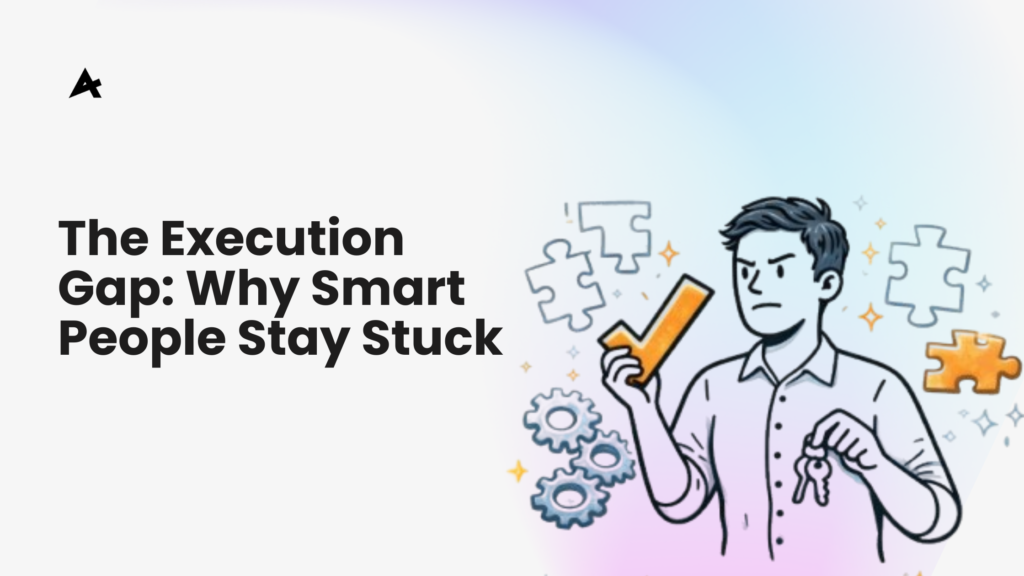
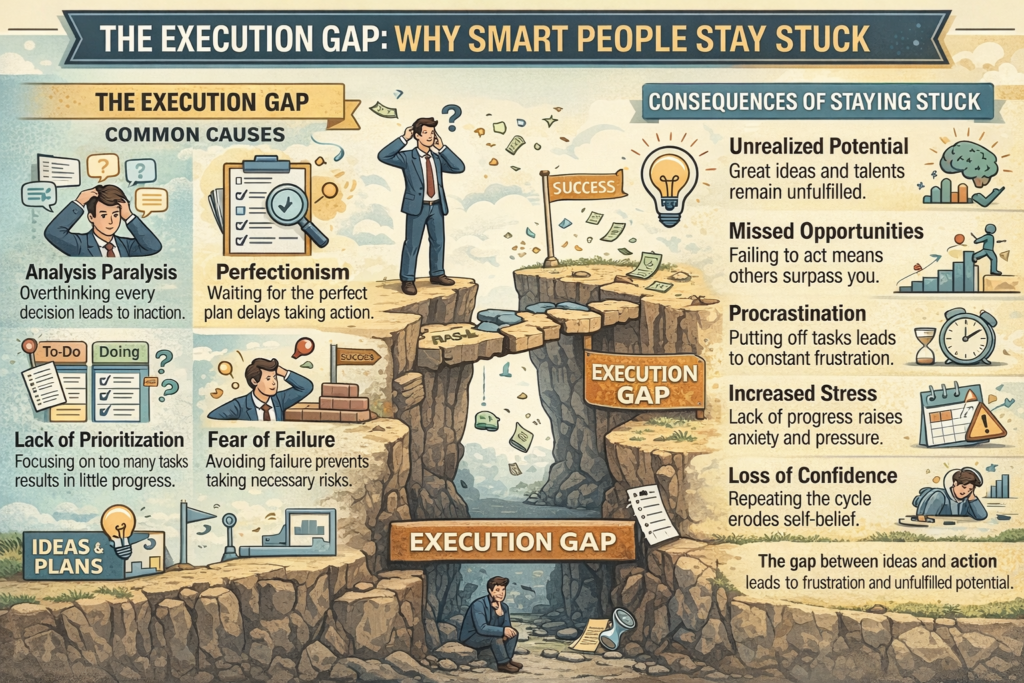
This is what I call the Execution Gap-the distance between what you intend to do and what you actually do. And it’s quietly running the show for most high-achieving people.
The Gap Isn’t About Motivation
Here’s the first thing most productivity advice gets wrong: it treats the execution gap like a motivation problem. If you just want it badly enough, you’ll do it. If you’re not doing it, you must not really care.
That’s not only wrong-it’s cruel. Because it takes a structural problem and makes it personal.
The execution gap exists because our brains are wired for reaction, not intention. We’re extraordinarily good at responding to whatever is most urgent right in front of us -the ping, the request, the fire to put out. We’re much worse at proactively working toward things that matter but don’t demand our attention right now.
The urgent is rarely important. The important is rarely urgent. And that gap is where your real goals quietly die.
So smart, driven people end up spending their best energy on things they care least about-and wondering why the things they care most about never seem to move.
Three Reasons Smart People Stay Stuck
1. The Planning Trap. Smart people love planning. Planning feels productive. It activates the same reward centers as actually doing the thing. But there’s a dark side: the more sophisticated your plan, the easier it becomes to keep refining it rather than executing it. The plan becomes a substitute for action rather than a catalyst for it.
2. Optionality Paralysis. Having more choices, more information, and more possible approaches doesn’t make decisions easier-it makes them harder. Clever people can always see the tradeoffs, always imagine the ways a plan could go wrong, always construct a reason to wait. Intelligence, ironically, becomes a weapon used against execution.
3. Invisible Accountability. When no one is watching, the internal negotiation begins. “I’ll do it tomorrow. I’ll do it when I have more time, more clarity, more energy.” Without external commitment or accountability, the clever mind will always negotiate its way out of discomfort. Not because you’re weak -because you’re human.
A quick reality check:
Think about the last meaningful goal you set-personal, professional, creative, health-related. Where is it today? If it’s still sitting exactly where you left it three months ago, you’re not alone. But you don’t have to stay there.
The Shift That Actually Works
The antidote to the execution gap isn’t more willpower. It’s not a better morning routine or another productivity system. It’s something simpler and harder at the same time: closing the loop between intention and accountability.
Research consistently shows that people who share their commitments with someone else-and face some form of genuine accountability-are dramatically more likely to follow through. Not slightly more likely. We’re talking 65-95% improvement depending on the structure of the accountability.
This is why coaches work. Why mastermind groups work. Why having a gym partner works, even when you genuinely don’t feel like going. It’s not magic. It’s just that human beings have evolved to show up for other people in ways we rarely show up for ourselves.
Breaking Free: What You Can Do Starting Today
Make your commitment concrete and public. Vague intentions stay vague. “I want to exercise more” is a wish. “I will run for 25 minutes on Monday, Wednesday, and Friday, and I’m telling my friend right now” is a commitment. Specificity and external witness change the psychological weight of a goal completely.
Shrink the horizon. Most people overestimate what they can do in a year and underestimate what they can do in 90 days. When you’re stuck, the problem is almost always that the goal is too abstract and too far away. Bring it closer. What does done look like in three weeks? What would you need to do this week for that to happen?
Build a consequence you actually care about. The brain doesn’t respond well to vague future benefits. It responds to real, near-term stakes. Tell someone you’ll pay them $50 if you miss your commitment. Send the embarrassing pre-written text if you fail. Create a consequence that makes the pain of inaction more immediate than the discomfort of action.
The Deeper Truth About Execution
Here’s what I’ve come to believe after watching this pattern play out again and again: staying stuck is never really about the task. It’s about what the task represents.
The unfinished screenplay isn’t just a screenplay. It’s a test of whether you’re actually creative. The business you haven’t started isn’t just a business. It’s a test of whether you have what it takes. As long as you haven’t tried-really tried, with accountability and consistency and skin in the game-you can preserve the dream. You haven’t failed because you haven’t fully attempted.
The execution gap, in this sense, is a kind of protection. A way of keeping the possibility alive without risking the reality.
Accompli exists for exactly this.
We built Accompli because accountability shouldn’t be a luxury. Whether you’re trying to build a habit, ship a project, or finally do the thing you’ve been putting off for years -Accompli gives you the structure and support to close the gap between intention and action.