Accountability Hack CEOs Use That You’ve Been Missing
You’ve attempted accountability buddies, you’ve created public goals on social media, you’ve even shelled out for that fancy planner with all the motivational quotes, but here you are, still missing deadlines and not following through on promises to yourself.
Meanwhile, each of the successful CEOs I’ve ever met has solved a secret you’re likely ignoring. It’s not some new productivity system or mindset change. It’s far more painful-and that’s precisely why it works.
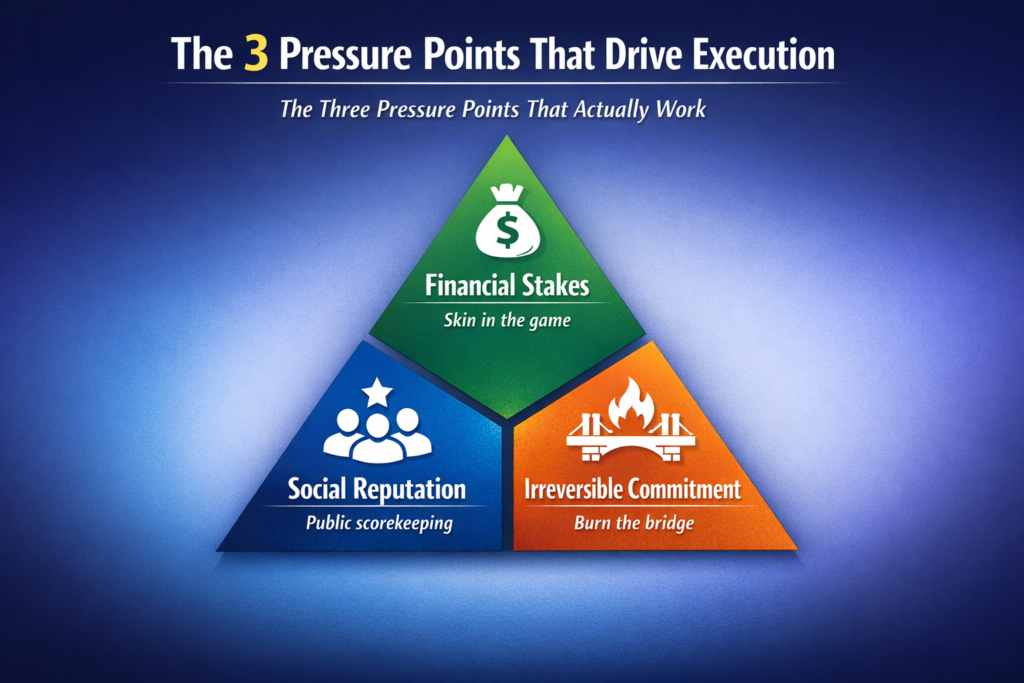
The Pressure Point Principle:
Why Motivation Dies (But Pressure Lives Forever)
The thing about motivation is, it’s an emotion, and emotions are unfriendly houseguests-they come uninvited, linger too long, then vanish when you least expect it.
Consider that, When was the last time you’ve ever missed a flight? Never, probably. Why is that? Because missing a flight has costly, instantaneous repercussions. There is no haggling with the gate.
But when did you last skip that side project you’ve been “meaning to work on”? Last week, probably. Why? Because the only person you’re letting down is future you, and future you doesn’t have a credit card to charge you for lost time.
The Three Pressure Points That Actually Work:
1. Financial Stakes (The Skin-in-the-Game Method)
Recall James Clear’s anecdote about paying his coach whether or not he attended? That’s pressure point one. But people screw this up most times.
Don’t just risk money-make the failure sting. CEO Marcus Williams donates $10,000 to a cause he loathes every time he fails to meet a quarterly target.
“I’d sooner burn money than donate it to people whose politics I abhor,” he chuckles. “It works every single time.”
2. Social Reputation (The Public Ledger Approach)
Sarah Chen now sends monthly updates to 47 people-investors, mentors, customers, even her teenage daughter, not inspirational quotes or vague progress reports. Hard numbers. Specific commitments. Public scorekeeping.
“My daughter once asked why I hadn’t hit a revenue target I’d mentioned,” Sarah says. “That fifteen-second conversation was more motivating than six months of vision board staring.”
The key? Pick people whose opinions you actually care about losing.
3. Irreversible Commitment (The Bridge-Burning Strategy)
This is the nuclear option, and it’s not for all. But when CEO David Park needed to make the leap from consulting to product development, he did something extreme: he informed his three largest clients he was closing his consulting business in six months.
“I gave myself no option,” he says. “I had to create a product company or go out of business. Strange how inventive you become when failure is not only failure-it’s financial disaster.”
The Dark Side Nobody Discloses
This is what the productivity experts won’t tell you: sustainable pressure demands emotional maturity, if you’re someone who already berates yourself over minor failures, piling on external pressure could backfire in a huge way.
I observed one entrepreneur make huge public commitments, then panic when he began to fall behind. He used more energy fighting anxiety than delivering on his plan.
The key is getting the pressure right. It must be uncomfortable, yet not immobilizing, like a weight vest while training-heavy enough to develop strength, not too heavy to move.
How to Build Your Own Pressure System
1. Start Small, Start Real
Choose one promise that makes a difference. Not life-altering, just significant enough that you would hurt to break it. Perhaps it’s writing a weekly report to five people you admire. Perhaps it’s betting $500 for a 30-day challenge.
2. Choose Your Witnesses Carefully
Your accountability group ought to consist of at least one individual who won’t let you weasel out of it with excuses. Not a mean person-someone who cares enough about your success to call you on it when you’re accepting less.
3. Make the Consequences Immediate
Consequences that are postponed are feeble consequences. If you don’t meet your commitment on Friday, the consequence ought to land by Monday. Delayed pain is pain dismissed.
4. Track in Public, Fail in Public
Track your progress somewhere that others will see it. A plain spreadsheet, a weekly email, even an update on social media. The point isn’t to appear perfect-it’s to make it impossible to hide. You can use Accompli App to track as well
5. The Question That Changes Everything
This is what the CEOs who actually deliver have in common with everyone else: they ask one ruthless question before they commit.
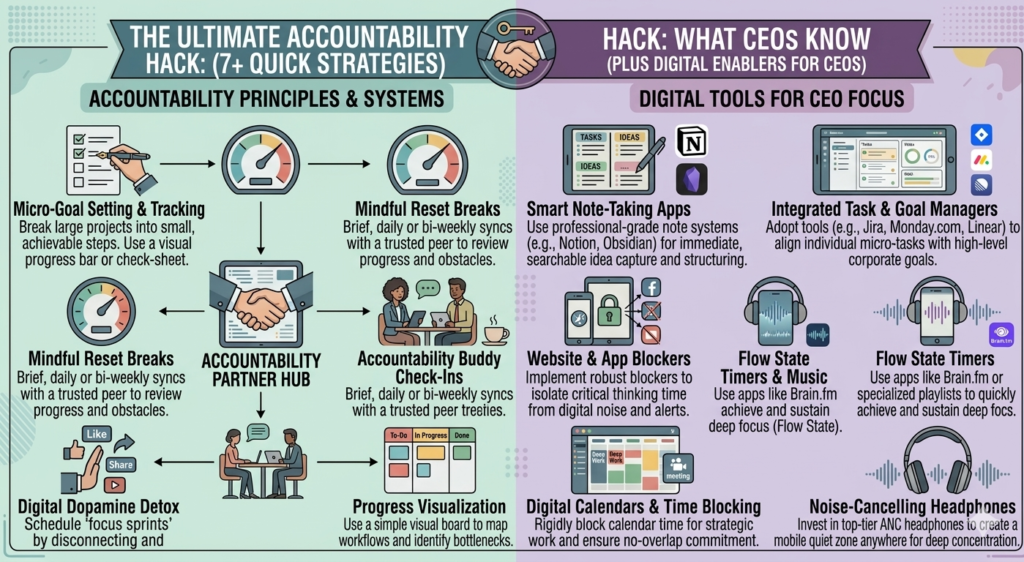
“What happens if I don’t follow through?”
If the response is “nothing much,” they either raise the stakes or bypass the commitment altogether. They’ve discovered that promises without pressure are costly daydreams.
So here’s the challenge: Choose one goal you’ve been putting off. Now ask yourself-what would have to be at stake for failure to be unthinkable?
Don’t just think about it. Actually establish those stakes. Today.
Because the distinction between dreaming and doing isn’t motivation. It’s pressure. And pressure, unlike motivation, never gets a day off.